8 Ways You Can Start Investing Today

8 Ways You Can Start Investing Today
The 2023 economy was defined by the Federal Reserve's continued fight to tamp inflation down while it chewed through consumers' purchasing power and excitement over new artificial technology, propelling considerable gains in the stock market. It came after a painful 2022 for markets. But by the end of 2023, Wall Street declared the carnage from higher interest rates as mostly in the rearview mirror.
Looking forward, Goldman Sachs forecasts the U.S. economy to grow 1.8% over 2024—a far cry from the negative growth required for a recession, as so many economists have feared might occur in the last few years. In fact, in the first three months of 2024, the S&P 500 soared to several highs, achieving its best first-quarter performance since 2019.
Regardless of how the market goes—recognizing that no one has a crystal ball—the most skilled investors always look for the best places to put away their money for the future. Navigating volatile markets means working on long-term financial goals by buying into short, medium, or long themes that can turn into a gain. Abandoning the market altogether is not an option. And it is possible to increase wealth during downturns. As the adage goes: buy low and sell high.
Magnifi, an AI investing app, broke down eight investment types and analyzed historic market data from common indexes to show the average rate of returns for each. The asset classes are as varied as people's interests, from stocks in mega corporations worth more than a trillion dollars to gold, a globally and historically recognized marker of wealth.
This article includes data on 15-year and single-year trends for each of the eight investment classes to provide context about growth over time and the shorter-term volatility of some of these assets. And remember, all investments come with some level of risk, so be sure to do your research and consult a financial advisor before investing to make sure you've planned the right strategy for your financial situation.
Image source: Canva
US large cap stocks
Cumulative rate of return since 2009: 580.47% (SPDR S&P 500 ETF Trust)
2023 cumulative return: 26%
Think of U.S. large-cap stocks as the big dogs of asset classes. Apple, Microsoft, Amazon, and Eli Lilly are examples of U.S. large caps, companies with a market capitalization of more than $10 billion. They are often household names.
Market capitalization refers to the total dollar market value of a company's outstanding shares of stock. Large-cap stocks are traded on stock exchanges, like the New York Stock Exchange and NASDAQ.
Image source: Canva
US small cap stocks
Cumulative rate of return since 2009: 392.10% (iShares Russell 2000 ETF)
2023 cumulative return: 16.83%
Consider U.S. small caps the baby sibling of U.S. large caps, a little more volatile and worth less, but still traded on major stock markets. Small-cap companies have a market capitalization of around $300 million to $2 billion. Investors who don't mind taking risks may invest in small-cap stocks because the growth potential can be more significant. Likewise, the potential for the stock to fall is more significant, too.

Image source: Canva
Emerging markets stocks
Cumulative rate of return since 2009: 92.46% (iShares MSCI Emerging Markets ETF)
2023 rate of return: 8.95%
Emerging markets stocks are investments in companies in economically developing nations such as Brazil, Russia, India, and China. They are considered risky, but with significant risks can come big rewards. Due to their risk, many don't get traded on major stock markets as singular stocks. However, there are opportunities in emerging stocks through exchange-traded funds, bonds, mutual funds, real-estate investment trusts, and American depository receipts.
Image source: Canva
US bonds
Cumulative rate of return since 2009: 35.92% (iShares Core US Aggregate Bond ETF)
2023 rate of return: 5.65%
U.S. bonds are long-term securities issued by the Treasury Department, part of the U.S. federal government. Sold for a term of 20 or 30 years, they pay investors a set rate of interest every six months until they mature. Investors can sell the bond before it matures or hold onto it until it no longer earns interest. When the federal government raised interest rates consistently to fight inflation in 2022, bond prices suffered, making it the worst year for U.S. bonds in history.
Image source: Canva
High-yield bonds
Cumulative rate of return since 2009: 128.41% (iShares iBoxx $ High Yield Corp Bd ETF)
2023 rate of return: 11.54%
High-yield bonds are often called "junk bonds" because they carry so much risk they can quickly become worthless. On the other hand, they may also rapidly become extremely valuable. They are offered by companies with lower credit ratings than those whose bonds are considered "investment-grade." But because of that risk, high-yield bonds often offer higher interest rates than other bonds. Economists use high-yield bonds, more vulnerable to credit and economic risk, to gauge the interest of investors in the market as confident investors tend to take on more risk. When large numbers of companies that issue high-yield bonds go under simultaneously, it can harm the wider financial markets. Historical junk bond crises include the savings and loan scandal of the 1980s, the dot-com crash in the early 2000s, and 2008's subprime mortgage crisis.
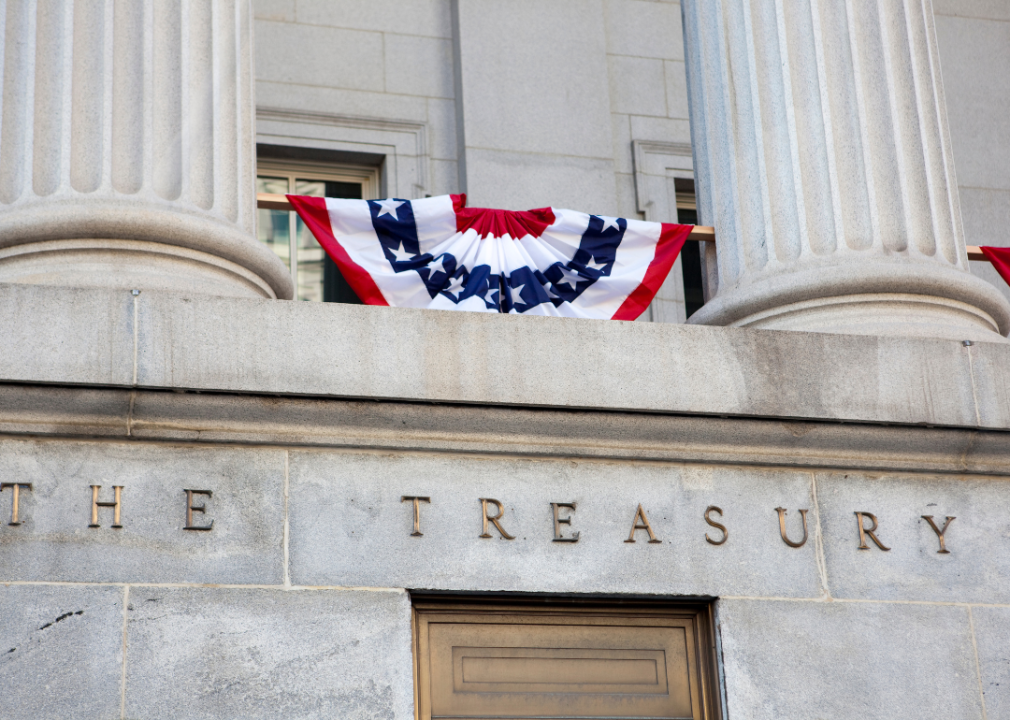
Image source: Canva
Treasury bills
Cumulative rate of return since 2009: 6.25% (SPDR Blmbg 1-3 Mth T-Bill ETF)
2023 rate of return: 4.94%
Affectionately known as T-bills, treasury bills are low-risk, short-term investments backed by the Treasury Department. T-bills mature in one year or less and do not pay regular interest, but investors buy them for a lower amount than their face value—and the difference is the investor's expected return. Investors can buy T-bills directly from the U.S. Treasury or banks and brokerages.

Image source: Canva
Real estate investment trusts
Cumulative rate of return since 2009: 6.25% (SPDR Blmbg 1-3 Mth T-Bill ETF)
2023 rate of return: 4.94%
Affectionately known as T-bills, treasury bills are low-risk, short-term investments backed by the Treasury Department. T-bills mature in one year or less and do not pay regular interest, but investors buy them for a lower amount than their face value—and the difference is the investor's expected return. Investors can buy T-bills directly from the U.S. Treasury or banks and brokerages.

Image source: Canva
Gold
Cumulative rate of return since 2009: 96.73% (SPDR Gold Shares)
2023 rate of return: 12.69%
Globally accepted as a sign of wealth, gold is a popular investment because it is used for luxury jewelry, coins, dentistry, aerospace, and electronics. The cost of gold fluctuated in 2022, initially rising after the Russian invasion of Ukraine and dropping later in the year. In 2023, gold prices spiked again after the collapse of Silicon Valley Bank. It is considered a safe haven asset, especially during times of upheaval or uncertainty. People can invest in gold through an online dealer, a pawn shop, gold futures, or an investment account.
USE AI TO MANAGE YOUR FINANCIAL FUTURE
Unlock personalized AI-powered portfolio analysis to better align your portfolio's performance to your investment goals.
References:
- https://www.goldmansachs.com/intelligence/pages/2024-us-economic-outlook-final-descent.html
- https://www.forbes.com/advisor/investing/small-cap-stocks/
Disclosures:
Magnifi is an SEC Registered Investment Advisor. All investments involve risks, including possible loss of principal. Download a summary prospectus and/or prospectus, which contains this and other information and read it before you invest or send money. See Terms and Conditions at magnifi.com
Story editing by Jeff Inglis. Copy editing by Kristen Wegrzyn. Photo selection by Ania Antecka.